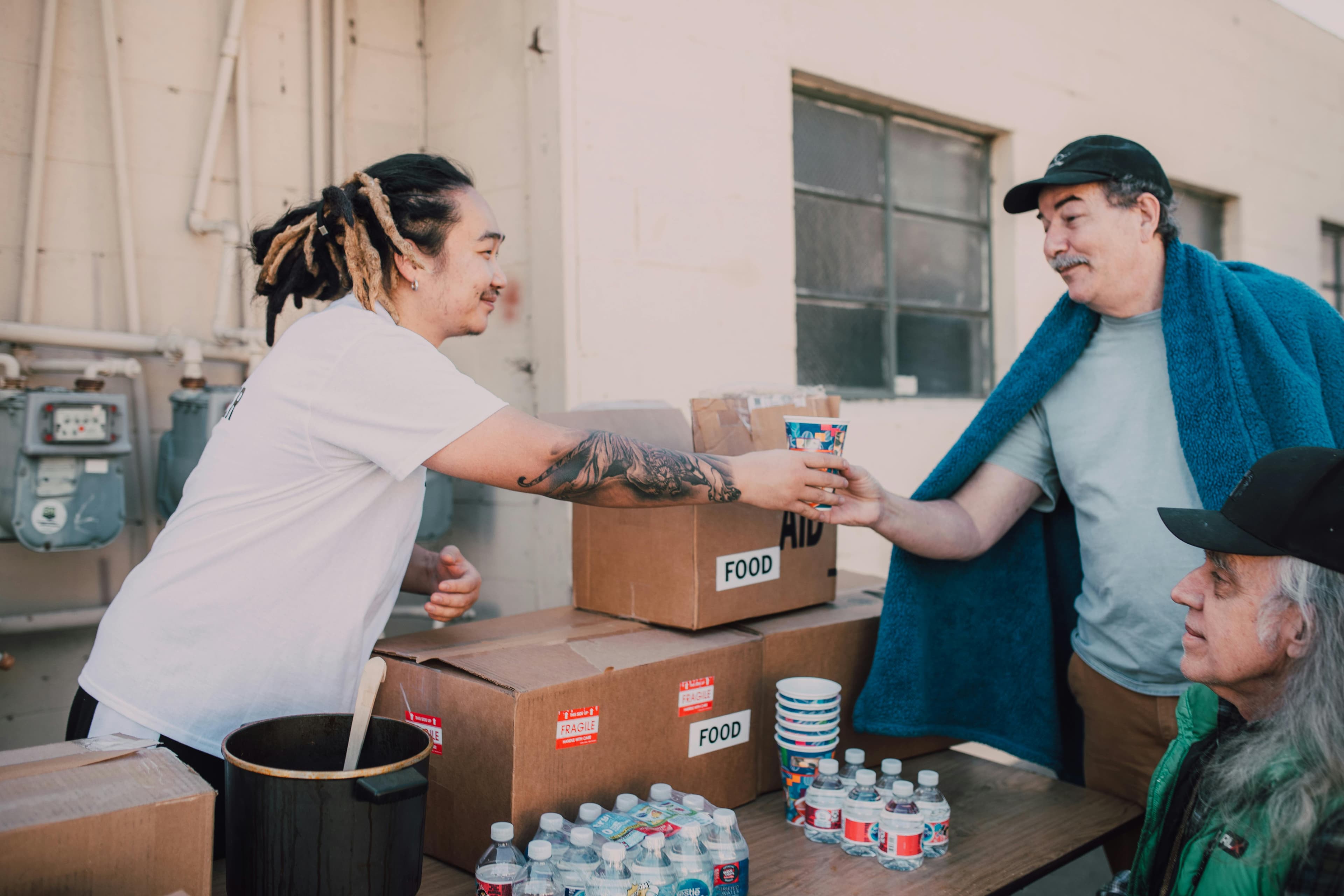
The Grocery Program That Gives Back
Every time you shop at a traditional grocery store, money flows out of your community—to distant shareholders, corporate headquarters, and investment firms. Commonwealth Grocers reverses this extraction, creating a closed-loop system where every dollar spent on groceries strengthens local economies, supports struggling farmers, empowers small artisan producers, and returns wealth directly to the families who create it. This isn't charity. It's a fundamentally different economic model—one that proves communities build more wealth together than they ever could by enriching distant corporations.
Saving Farmers While Feeding Communities
American agriculture is experiencing a quiet catastrophe. Since 2017, over 160,000 small farms have gone bankrupt—victims of consolidation, exploitative supply chains, and grocery retailers who squeeze producers to maximize their own margins. Every week, another family farm that survived generations disappears, replaced by industrial operations that prioritize volume over sustainability, profit over nutrition, and efficiency over community.
Traditional grocery stores treat farmers as expendable cost centers. They demand rock-bottom wholesale prices, impose arbitrary quality standards that favor industrial producers, and delay payments for months—all while marking up products 40-100% before they reach consumers. Farmers shoulder all the risk of weather, pests, and market volatility while grocery chains capture the majority of profit.
The Profit-Sharing Difference
Commonwealth Grocers breaks this exploitative cycle with direct profit-sharing. Farmers don't just receive fair wholesale prices—they receive 30% of our quarterly net profits, distributed proportionally based on their supply volume. This transforms farmers from exploited vendors into valued partners who benefit directly from our collective success.
Real Numbers: What Profit Sharing Means for Farmers
Consider Green Valley Farm, a mid-sized organic vegetable operation supplying $200,000 annually in produce to Commonwealth:
- Traditional model: Wholesale revenue of $200,000 with 8-12% profit margins = $16,000-$24,000 annual profit
- Commonwealth model: Same $200,000 wholesale revenue PLUS proportional profit sharing = $16,000-$24,000 base profit + $45,000-$78,000 in quarterly distributions (by Year 10-20)
- Total benefit: 200-350% increase in farm income from the same production volume
This additional income makes the difference between bankruptcy and thriving—between selling to corporate consolidators and passing farms to the next generation.
By Year 20, Commonwealth projects $78.7 million in annual profit-sharing flowing directly to farmer partners. That's not charity—it's recognition that farmers create the foundation of our entire food system and deserve to share in the value they generate.
Why This Matters Beyond Individual Farms
When farms fail, communities lose more than local food sources. They lose biodiversity as industrial monocultures replace diverse crop rotations. They lose environmental stewardship as corporations prioritize extraction over soil health. They lose food security as supply chains centralize and become fragile. They lose cultural heritage as agricultural knowledge disappears.
Commonwealth's profit-sharing model keeps farms viable, which keeps communities resilient. Every farmer who survives because of our system maintains biodiversity, environmental knowledge, and local food production capacity that benefits everyone—whether they shop with us or not.
Saving Families $2,880 Annually Through Zero-Waste Operations
Traditional grocery stores waste approximately 30% of their inventory. They over-order to ensure fully stocked shelves, discard produce that doesn't meet cosmetic standards, and throw away thousands of pounds of perfectly good food daily. Shoppers pay for this waste through inflated prices—subsidizing the spoiled food that ends up in dumpsters.
They also pay for expensive real estate, utilities for massive refrigerated warehouses disguised as stores, staff to continually restock shelves, and elaborate marketing campaigns. These costs have nothing to do with food quality—they're pure overhead that traditional grocers pass directly to consumers.
The 48-Hour Pre-Order Revolution
Commonwealth eliminates these costs through streamlined operations built around 48-hour pre-order fulfillment. You order Tuesday; you pick up Thursday. This simple change cascades through our entire system:
- Near-zero waste: We order from suppliers based on actual customer demand, not speculative inventory
- No expensive storefronts: We operate from efficient fulfillment centers, not expensive retail locations
- Reduced labor overhead: Pre-bagging orders is more efficient than shoppers wandering aisles while staff continuously restocks
- Wholsale prices: Our easy-to-use ordering system splits wholesale pallets among customers, simplifying logistics and eliminating retail markups
These operational efficiencies translate directly into 30% average savings for shoppers—not through lower quality, but through eliminated waste.
The Family Savings Calculator
For a family of three spending the average $800 per person monthly on groceries:
- Traditional grocery spending: $2,400/month = $28,800/year
- Commonwealth pricing (30% savings): $1,680/month = $20,160/year
- Annual family savings: $8,640
But that's not all. As member-owners, families also receive quarterly profit-sharing distributions. By Year 10, the average family shopping regularly with Commonwealth receives an additional $1,200-$2,400 annually in patronage returns.
Total benefit: $10,000+ annually per family returned to the community
Multiply these savings across hundreds of families, and you're talking about millions of dollars staying in local economies rather than flowing to distant shareholders. Money that gets spent at local businesses, saved for education, invested in homes, or used to build generational wealth.
Strengthening Small Businesses Through Strategic Partnerships
Traditional grocery stores are destinations—massive boxes on the edge of town that you must drive to, park at, and spend 45 minutes wandering through. They compete with every other business for customer attention and foot traffic. Local coffee shops, gyms, and community centers struggle to attract visitors while grocery chains monopolize shopping trips.
Commonwealth Grocers flips this dynamic by turning small businesses into partners rather than competitors. We establish grocery pickup locations at local businesses seeking more foot traffic—and share profits with them for hosting our service.
The Pickup Location Partnership Model
Imagine a local bakery that hosts a Commonwealth pickup location. Every Thursday evening, 50-100 families stop by to collect their pre-ordered groceries. While there, they:
- Grab a latte while waiting for their order
- Purchase a pastry they didn't plan to buy
- Notice the local art for sale on the walls
- Buy up the bread that's about to be thrown out
- Tell friends about the convenient new pickup spot
The bakery gains hundreds of potential customers weekly—people who might never have stopped by otherwise. In exchange for providing space and occasionally accepting deliveries, they receive profit sharing as strategic partners in our network.
Convenient Locations Where You Already Are
Our goal is for you to never visit a grocery store again—not because you can't, but because you don't need to. We establish pickup locations strategically:
- On your commute home: Main road locations mean no detours from your regular route
- At places you already visit: Gyms, religious centers, community centers, schools, local businesses you frequent
- Near your workplace: Grab groceries before heading home, saving an entire separate trip
- Where you spend time anyway: Pick up your order while your kids are at practice, while you're at yoga, after your weekly service
By eliminating dedicated grocery trips, we save families 3-5 hours monthly—time that can be spent with family, on hobbies, or simply resting. We also reduce vehicle miles traveled, cutting carbon emissions while saving on gas.
The Experience: Fast, Fun, or Custom—Your Choice
Commonwealth pickup locations offer flexibility based on your needs:
- 30-second grab-and-go: Pre-bagged groceries ready for immediate pickup when you're in a hurry
- Custom selection: Choose your specific cuts of meat, inspect produce quality, select the ripest avocados—retain full control when you want it
- Community experience: Sample local artisan products, enjoy live music from local musicians, discover new producers at featured vendor events
Traditional grocery stores force everyone through the same time-consuming experience. Commonwealth adapts to your life, offering convenience when you need speed and engagement when you want discovery.
Opening Shelves to Small Artisan Producers
Walk into any traditional grocery store and you'll find thousands of products—but they're nearly all produced by a handful of massive corporations. This isn't accidental. Chain grocers charge "slotting fees" of $5,000-$50,000 per product just to access shelf space, then demand additional payments for preferred placement, end cap displays, and promotional support.
Small artisan producers—the baker making sourdough with heritage grains, the farmer producing raw honey from local hives, the maker crafting small-batch hot sauce—simply cannot afford these fees. They get priced off shelves entirely, leaving space exclusively for industrial manufacturers who achieve low prices through environmentally destructive practices, low-nutrition ingredients, and exploitative labor.
The Commonwealth Difference: Zero Slotting Fees
Commonwealth charges no slotting fees. Zero. Our digital platform costs essentially nothing to add products, so we welcome small producers who meet basic quality and safety standards. This creates a marketplace that actually reflects community diversity:
- Local artisan bread competes directly with industrial sandwich loaves—winning on taste, not corporate buying power
- Small-batch preserves from family operations sit alongside corporate jams—differentiated by quality, not shelf space fees
- Heritage meat from regenerative farms offers an alternative to factory-farmed products—accessible without premium placement costs
- Experimental products from new producers can test market viability without risking bankruptcy on slotting fees
Environmental and Nutritional Impact
Supporting small artisan producers isn't just about economic justice—it's about environmental sustainability and community health:
- Higher nutrition density: Small producers typically use whole ingredients, traditional methods, and less processing
- Lower environmental impact: Local production means shorter supply chains, less packaging, and often more sustainable practices
- Preserved food traditions: Heritage grains, traditional fermentation, and cultural recipes survive through small producer support
- Transparency: Small producers can't hide behind corporate PR—you can literally visit their operations
By Year 10, Commonwealth projects supporting 1,000+ small artisan producers who would otherwise be excluded from grocery distribution entirely. Each represents preserved knowledge, environmental sustainability, and nutritional quality that industrial food systems systematically eliminate.
Paying Living Wages and Sharing Profits With Every Stakeholder
Traditional grocery stores treat workers as costs to minimize. Average grocery wages hover around $12-15/hour with minimal benefits, forcing workers to rely on government assistance to survive. Meanwhile, grocery chains generate billions in profits that flow to distant shareholders who never set foot in stores, never stock shelves, never serve customers.
This extraction extends throughout supply chains: truckers are squeezed on delivery rates, vendors receive delayed payments, communities provide infrastructure and tax incentives while watching profits disappear. Traditional grocers extract value from everyone who makes their operations possible.
The $19/Hour Starting Wage
Commonwealth Grocers starts every employee at $19/hour minimum—25-58% above typical grocery wages. This isn't charity; it's recognition that workers create the value that makes our operations possible. But unlike traditional "good employers" who pay decent wages while still funneling profits to shareholders, we go further: workers receive 30% of quarterly net profits.
Real Wealth Building for Workers
Maria, a fulfillment center worker hired in Year 2 at $19/hour ($39,520 annually):
- Traditional grocery model: $39,520/year = $790,400 over 20 years
- Commonwealth model: $39,520/year wages + profit sharing
- Additional wealth created: $435,531
- Total 20-year earnings: $1,225,931
- Increase over traditional model (e.g. Costco): 55%
Maria retires sooner and with greater financial security from fulfillment center work—not through stock options or investments, but through sharing in the value she helps create.
Extending Profit Sharing Throughout the Network
Workers aren't the only ones who make Commonwealth possible. Our comprehensive profit-sharing model recognizes every stakeholder:
- 30% to Workers: The people who fulfill orders, manage operations, provide customer service
- 30% to Farmers: The producers who grow and raise our food supply
- 30% to Shoppers: The families who make our system viable through consistent participation
- 5% to Vendors: The logistics people who ensure the food reaches our fulfillment centers on time
- 5% to Strategic Partners: The businesses who host pickup locations and help us reach communities in food deserts and beyond
This isn't philanthropic generosity—it's economic recognition that value is created collectively. Traditional grocers treat this as a radical concept because they're structured to extract value upward to shareholders. Commonwealth is structured to circulate value horizontally among participants.
Cooperative Ownership at Scale
Commonwealth operates as a cooperatively-owned enterprise using Patronage Tracking Tokens (PTTs) to measure participation and distribute profits. This proven cooperative economics model used for decades in cooperative economies around the world has been adapted for modern scale using technology that makes democratic ownership actually manageable.
Every participant earns PTTs through contribution:
- Shoppers earn PTTs with every purchase
- Workers earn PTTs for every hour worked
- Farmers earn PTTs proportional to supply volume
- Partners earn PTTs based on their contribution level
PTTs cannot be bought, sold, or transferred—they can only be earned through participation. This makes extraction structurally impossible while creating genuine wealth-building opportunities for everyone who contributes.
The Multiplication Effect: How Community Wealth Compounds
When money circulates locally instead of extracting to distant shareholders, it multiplies in value through successive spending. Economists call this the "local multiplier effect"—every dollar spent locally generates approximately $1.50-3.50 in additional local economic activity.
Commonwealth's model maximizes this multiplication:
- Shoppers save 30% and receive profit sharing → spend savings at local businesses
- Workers earn living wages + profit sharing → spend increased income in their communities
- Farmers receive fair prices + profit sharing → invest in sustainable practices and local equipment suppliers
- Small producers access distribution → expand operations and hire local workers
- Partner businesses gain foot traffic → increase sales and employ more community members
The 20-Year Community Impact Projection
By Year 20, a single Commonwealth location distributing $262.4 million annually in profit sharing creates cascading local impact:
- Direct distributions: $262.4 million to participants
- Shopper savings: $180-240 million saved through 30% lower prices
- Local multiplier effect: $440-500 million in additional local economic activity from recirculated funds
- Jobs supported: 2,500+ direct jobs at living wages, 1,500+ indirect jobs from increased local spending
- Farms preserved: 100+ farms kept viable through profit sharing
- Small businesses strengthened: 200+ producers and 50+ partner locations thriving
Total community wealth impact: $880+ million annually by Year 20
Building the Alternative: From Extraction to Circulation
Traditional grocery stores will tell you their model is inevitable—that efficiency requires centralization, that scale demands corporate ownership, that shareholders deserve returns for their "risk." Commonwealth Grocers proves these are convenient fictions designed to justify extraction.
The truth is simpler: communities create more wealth working together than they ever can working for distant corporations. Every dollar that flows to shareholders in Manhattan or Silicon Valley is a dollar that could have stayed local—supporting farmers, building worker wealth, reducing family expenses, strengthening small businesses, and multiplying through successive local transactions.
The Choice Before Every Community
You face a fundamental choice about where your grocery dollars go:
Traditional Grocery Model:
- ✗ Profits extract to distant shareholders
- ✗ Farmers squeezed to minimize costs
- ✗ Workers paid minimum viable wages
- ✗ 30% food waste built into prices
- ✗ Small producers priced off shelves
- ✗ Time-consuming shopping experiences
- ✗ Communities weakened as wealth flows out
Commonwealth Model:
- ✓ Profits circulate to participants
- ✓ Farmers receive fair pay + profit sharing
- ✓ Workers earn living wages + profit sharing
- ✓ Near-zero waste saves families 30%
- ✓ Small producers welcomed to platform
- ✓ Convenient pickup where you already are
- ✓ Communities strengthened as wealth compounds
Your Participation Matters
Commonwealth Grocers succeeds only through collective participation. We're not built on venture capital seeking 10x returns or corporate debt requiring maximum extraction. We're built on community members choosing to recirculate wealth rather than extract it.
Every time you:
- Order groceries from Commonwealth → you earn PTTs and contribute to profit pools that support workers and farmers
- Pick up at a local business → you support that partner with foot traffic and help them thrive
- Try a small producer's product → you enable them to expand and hire more local workers
- Receive quarterly profit sharing → you benefit from collective success rather than enriching distant shareholders
You're not just buying groceries—you're voting for an economic model that keeps wealth circulating in your community.
Join the Circulation Revolution
Commonwealth Grocers is expanding to communities ready to reclaim their food systems. We're not asking you to sacrifice convenience—we're offering more convenience through pickup locations where you already are. We're not asking you to pay premium prices—we're offering 30% savings plus profit sharing. We're not asking you to settle for lower quality—we're offering access to local artisan producers traditional stores exclude.
We're asking you to imagine a different kind of economy—one where the people who create value are the ones who benefit from it. Where farmers thrive instead of going bankrupt. Where workers build generational wealth. Where families save thousands annually. Where small businesses strengthen instead of struggle. Where every dollar spent multiplies through local circulation instead of extracting to distant shareholders.
This isn't utopian dreaming. It's cooperative economics tested over generations, adapted for modern scale, and proven by Commonwealth's growing network of thriving communities.
Feed your family. Feed your community. Keep wealth where it belongs.
Commonwealth Grocers is a member-owned cooperative operating in communities ready to reclaim their food systems. Learn how to bring Commonwealth to your area at commonwealthgrocers.com.
Join Commonwealth Grocers Today
Ready to be part of the solution? Sign up now to show there is demand for a more efficient, people-owned food system in your area. The city with the most signups gets it first!
Register Now (Free)